Neurons and Synapses
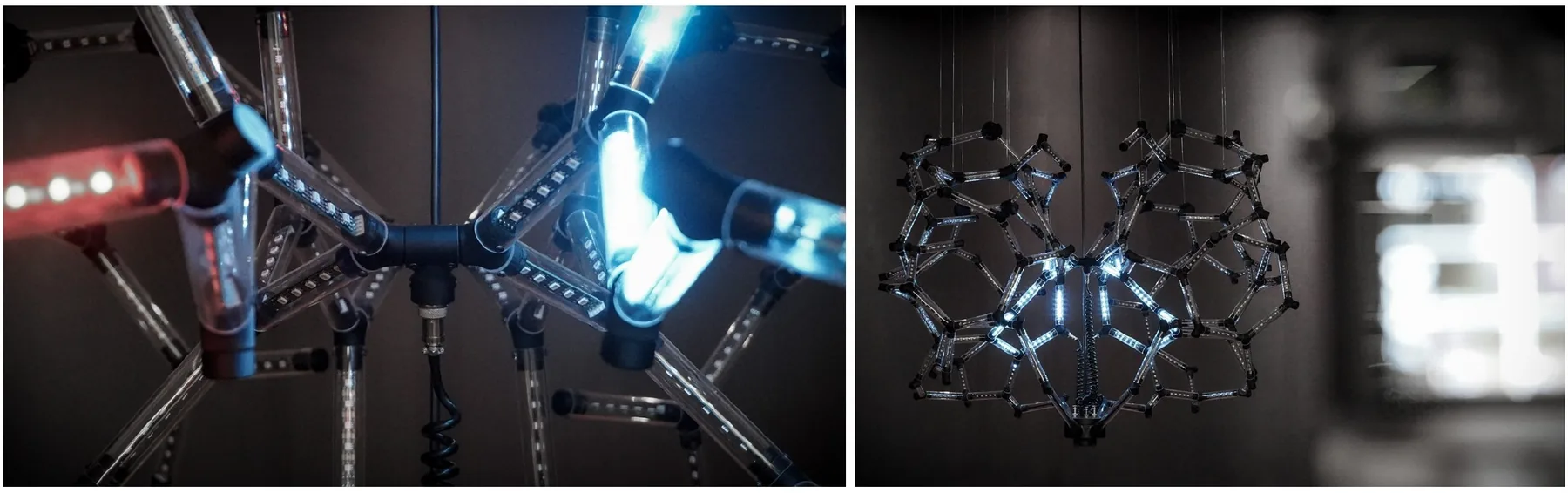
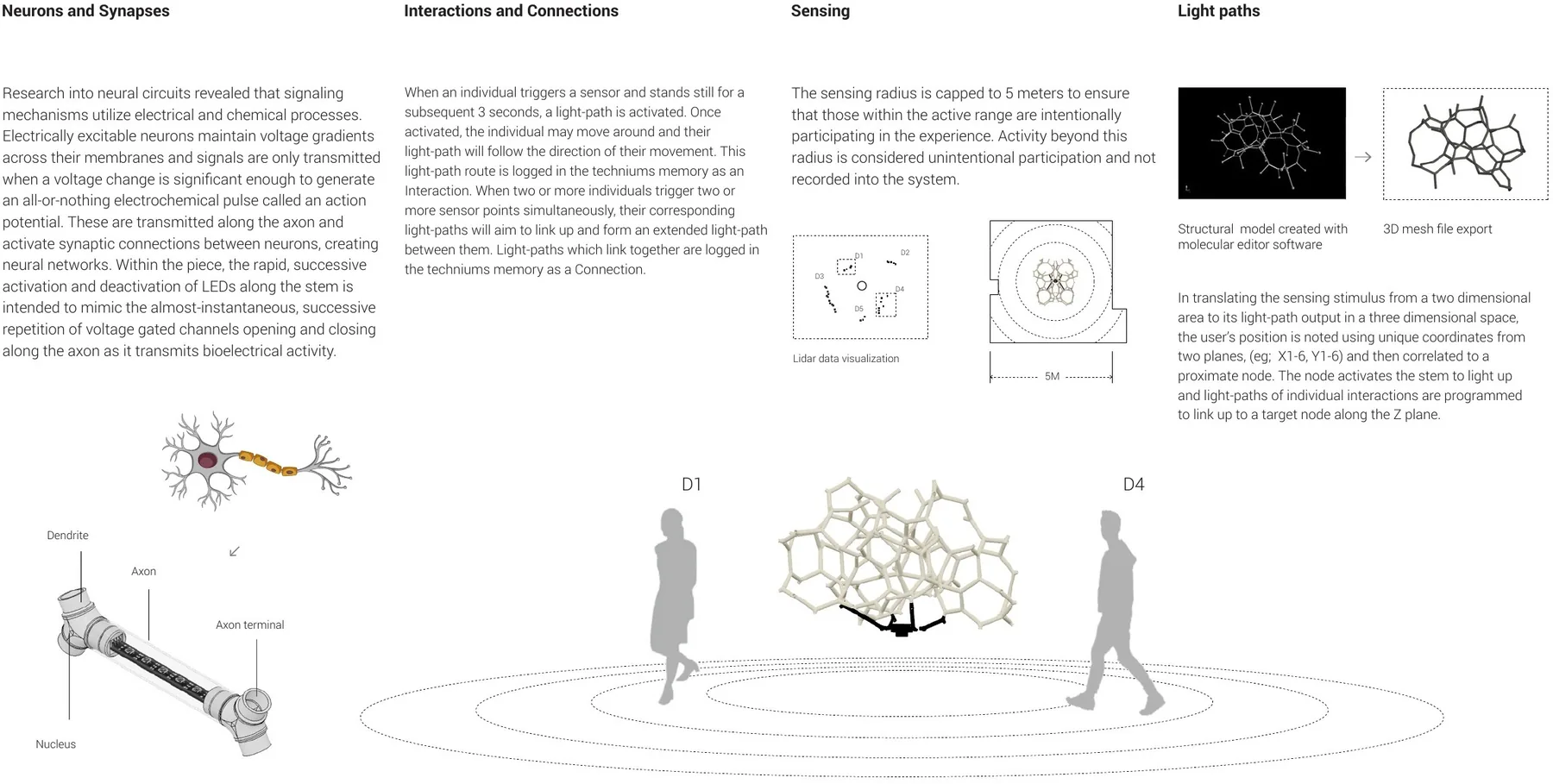
Research into neural circuits revealed that signaling mechanisms utilize electrical and chemical processes. Electrically excitable neurons maintain voltage gradients across their membranes and signals are only transmitted when a voltage change is significant enough to generate an all-or-nothing electrochemical pulse called an action potential. These are transmitted along the axon and activate synaptic connections between neurons, creating neural networks. Within the piece, the rapid, successive activation and deactivation of LEDs along the stem is intended to mimic the almost-instantaneous, successive repetition of voltage gated channels opening and closing along the axon as it transmits bioelectrical activity.
Interactions and Connections
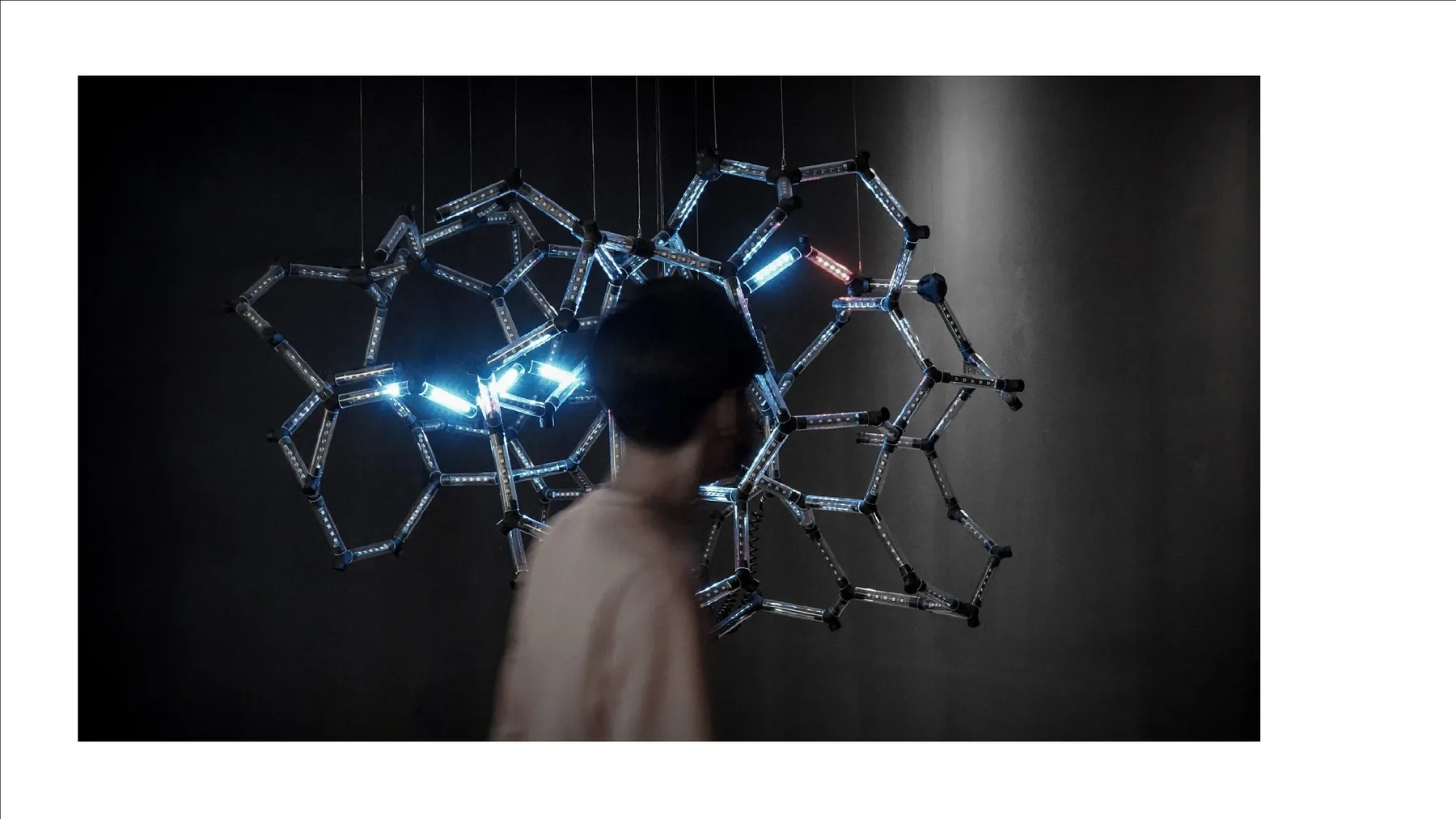
When an individual triggers a sensor and stands still for a subsequent 3 seconds, a light-path is activated. Once activated, the individual may move around and their light-path will follow the direction of their movement. This light-path route is logged in the technium’s memory as an Interaction. When two or more individuals trigger two or more sensor points simultaneously, their corresponding light-paths will aim to link up and form an extended light-path between them. Light-paths which link together are logged in the technium’s memory as a Connection.
Sensing
The sensing radius is capped to 5 meters to ensure that those within the active range are intentionally participating in the experience. Activity beyond this radius is considered unintentional participation and not recorded into the system.
Light paths
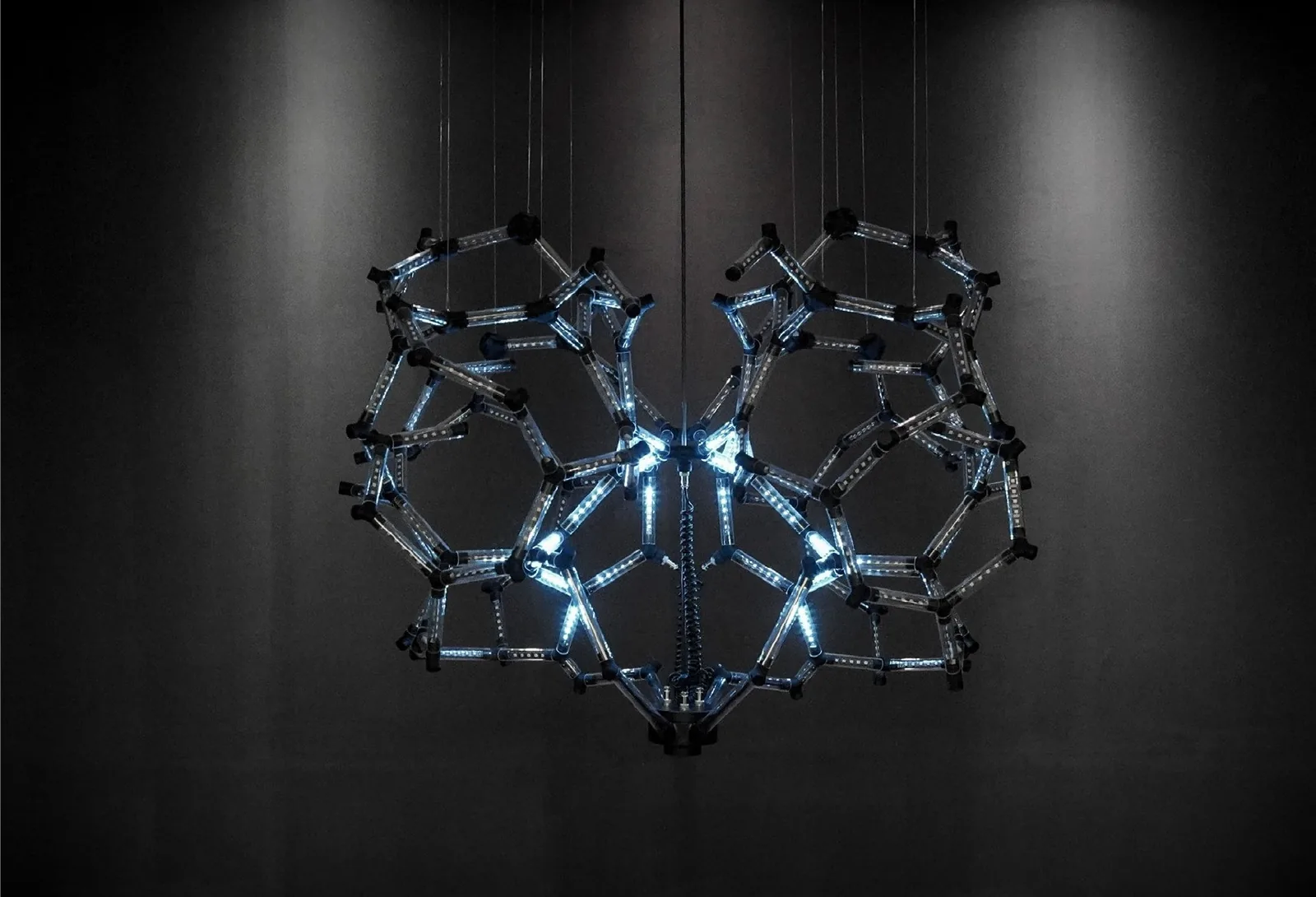
In translating the sensing stimulus from a two dimensional area to its light-path output in a three dimensional space, the user’s position is noted using unique coordinates from two planes, (eg; X1-6, Y1-6) and then correlated to a proximate node. The node activates the stem to light up and light-paths of individual interactions are programmed to link up to a target node along the Z plane.
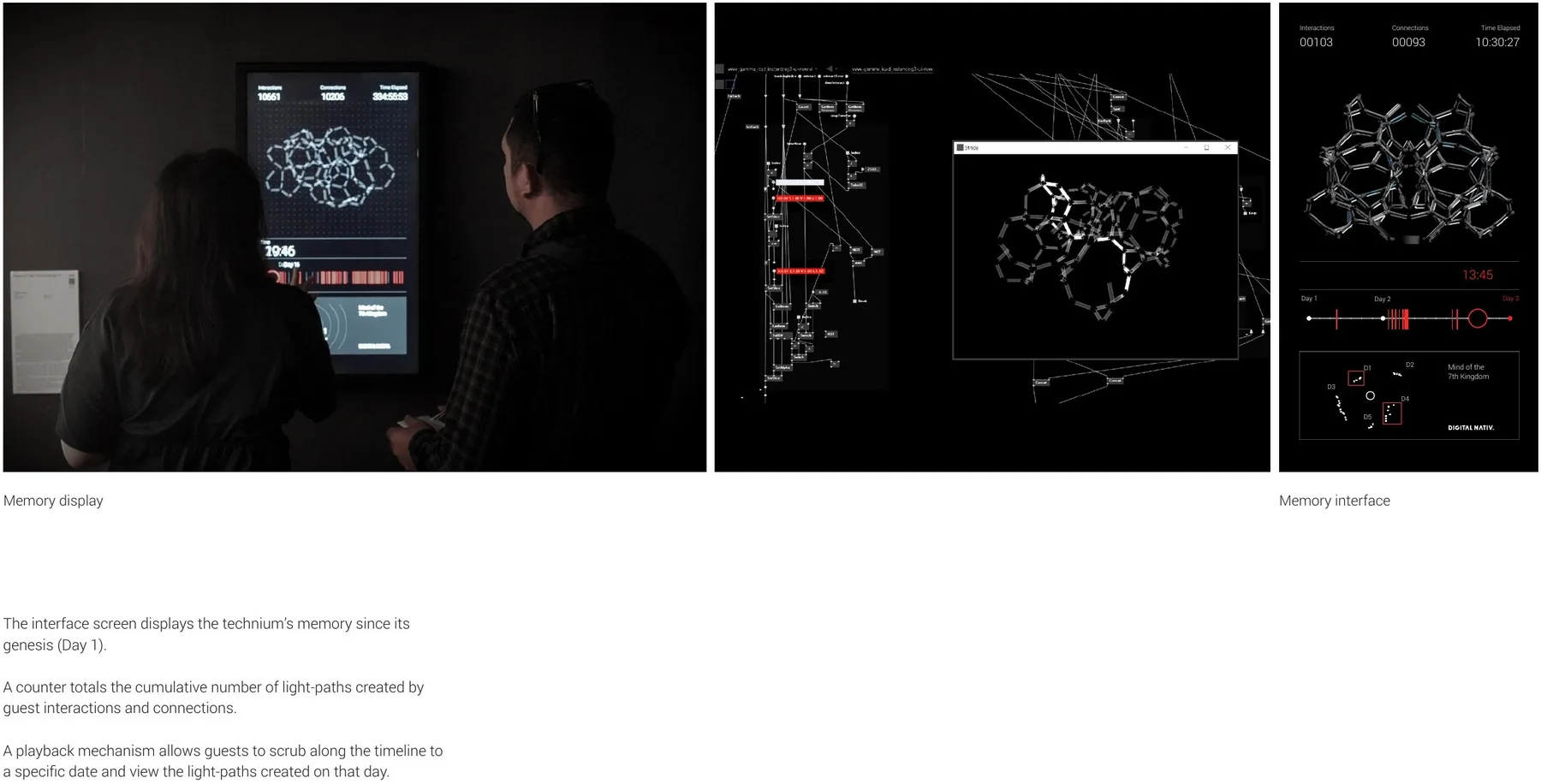
Memory display
The interface screen displays the technium’s memory since its genesis (Day 1).
A counter totals the cumulative number of light-paths created by guest interactions and connections.
A playback mechanism allows guests to scrub along the timeline to a specific date and view the light-paths created on that day.