Playback modes
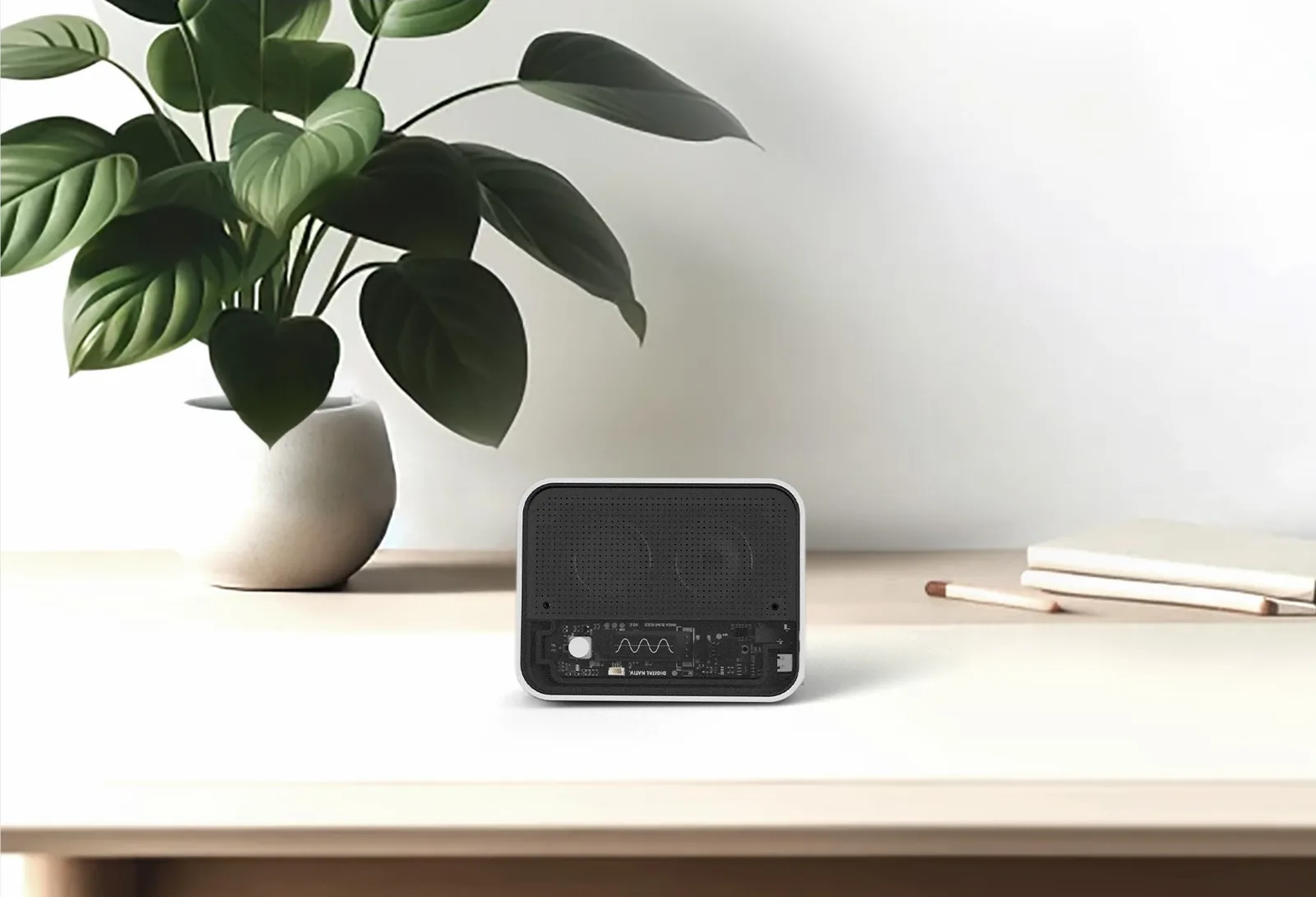
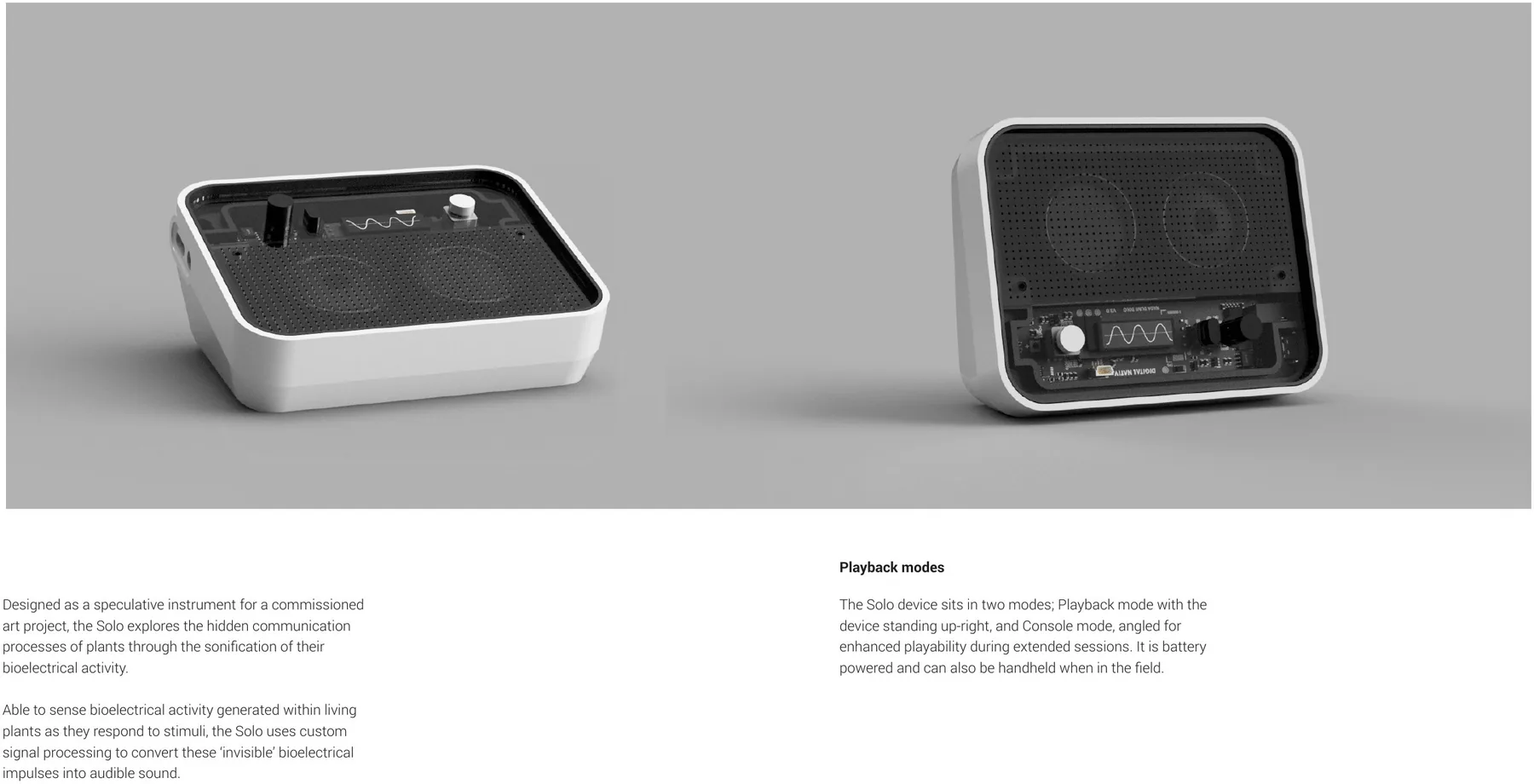
Designed as a speculative instrument for a commissioned art project, the Solo explores the hidden communication processes of plants through the sonification of their bioelectrical activity.
Able to sense bioelectrical activity generated within living plants as they respond to stimuli, the Solo uses custom signal processing to convert these ‘invisible’ bioelectrical impulses into audible sound.
The Solo device sits in two modes; Playback mode with the device standing up-right, and Console mode, angled for enhanced playability during extended sessions. It is battery powered and can also be handheld when in the field.
Signal Processing
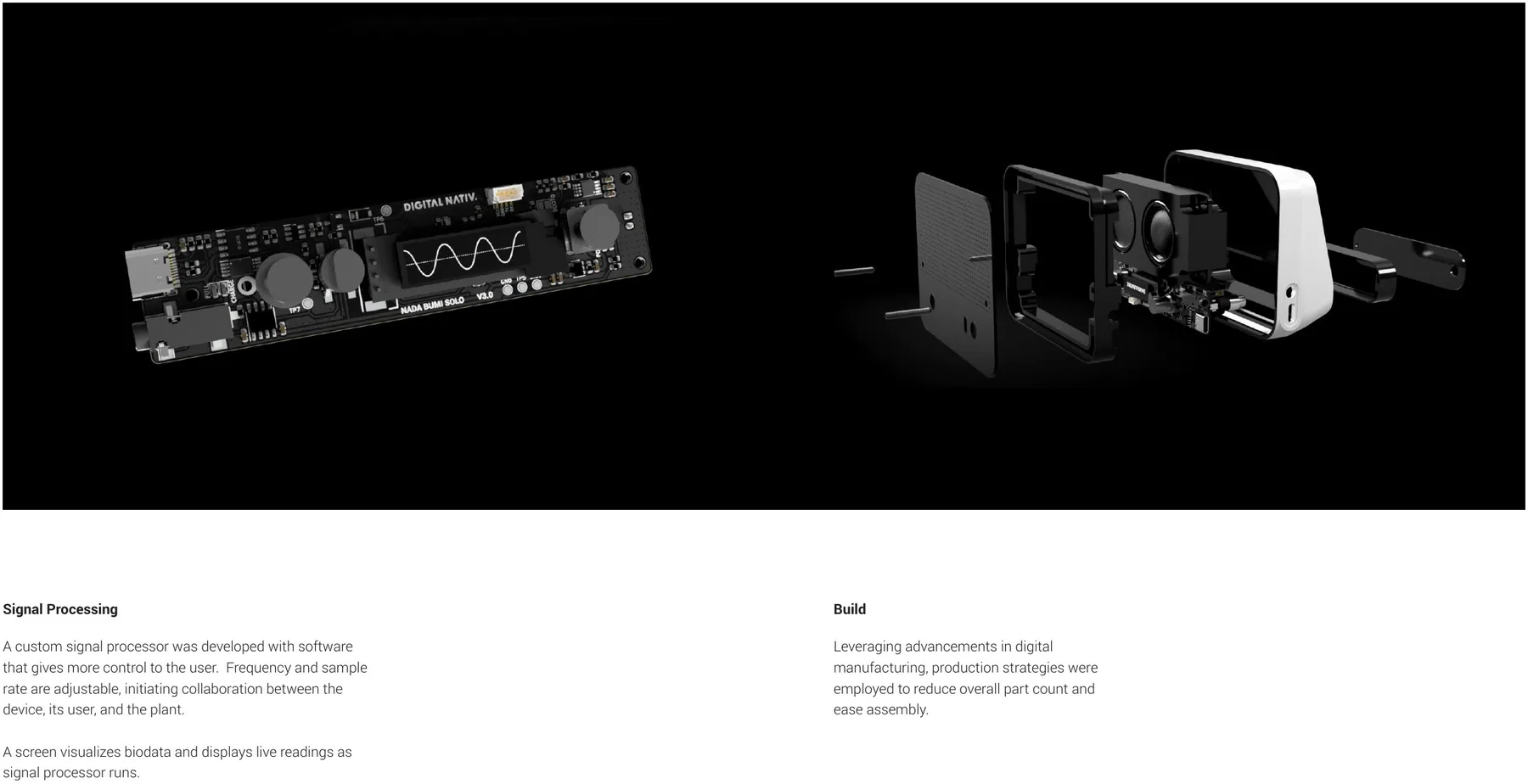
A custom signal processor was developed with software that gives more control to the user. Frequency and sample rate are adjustable, initiating collaboration between the device, its user, and the plant.
A screen visualizes biodata and displays live readings as signal processor runs.
Build
Leveraging advancements in digital manufacturing, production strategies were employed to reduce overall part count and ease assembly.
Publications
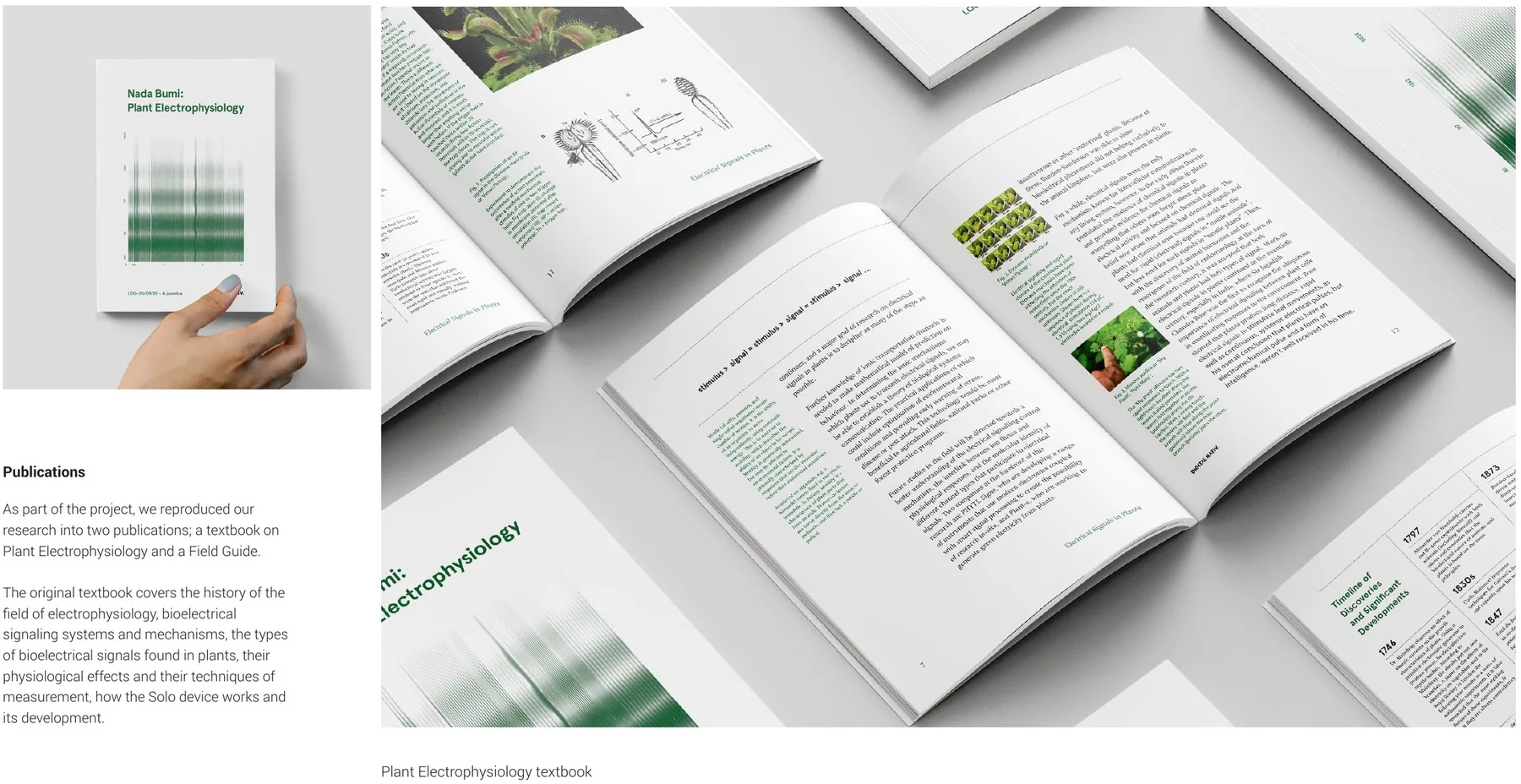
As part of the project, we reproduced our research into two publications; a textbook on Plant Electrophysiology and a Field Guide.
The original textbook covers the history of the field of electrophysiology, bioelectrical signaling systems and mechanisms, the types of bioelectrical signals found in plants, their physiological effects and their techniques of measurement, how the Solo device works and its development.
Field Guide
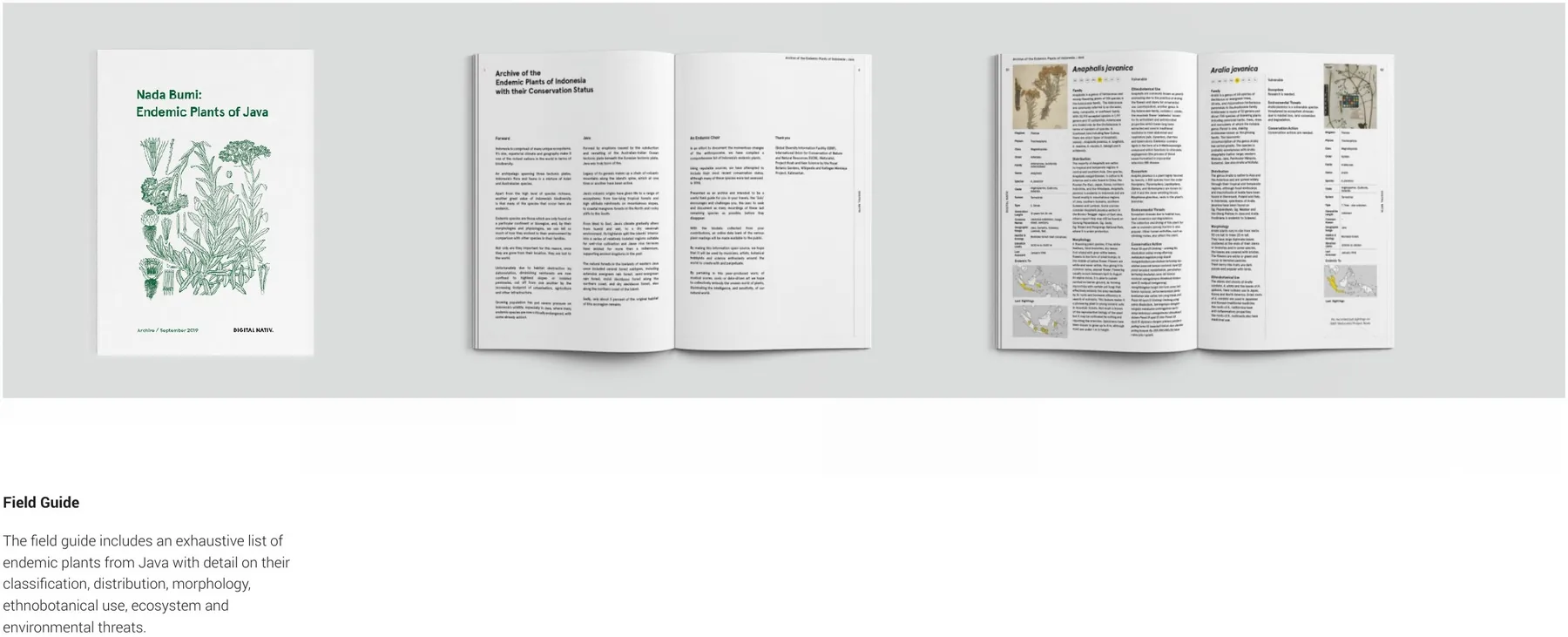
The field guide includes an exhaustive list of endemic plants from Java with detail on their classification, distribution, morphology, ethnobotanical use, ecosystem and environmental threats.
Visualization
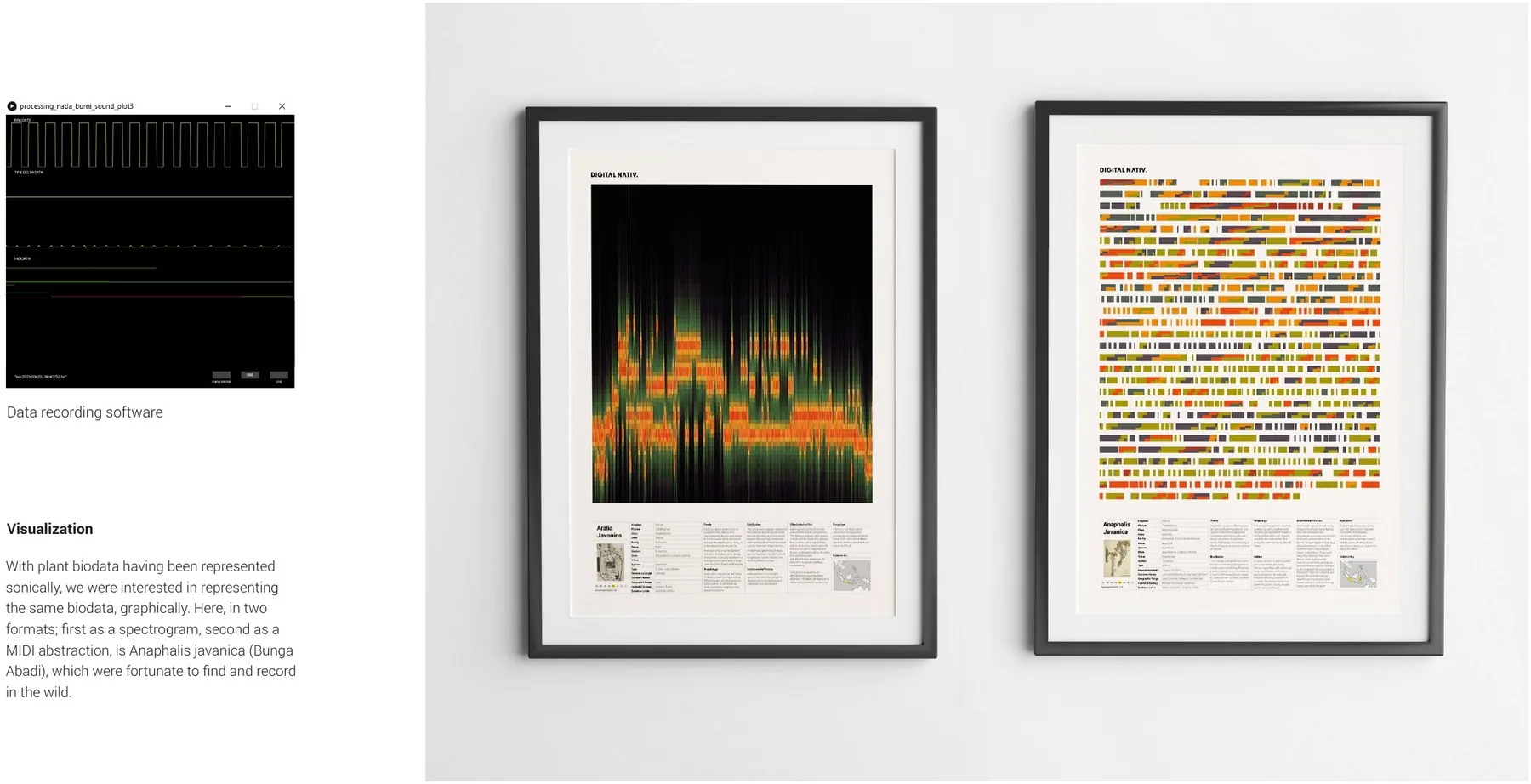
With plant biodata having been represented sonically, we were interested in representing the same biodata, graphically. Here, in two formats; first as a spectrogram, second as a MIDI abstraction, is Anaphalis javanica (Bunga Abadi), which we were fortunate to find and record in the wild.